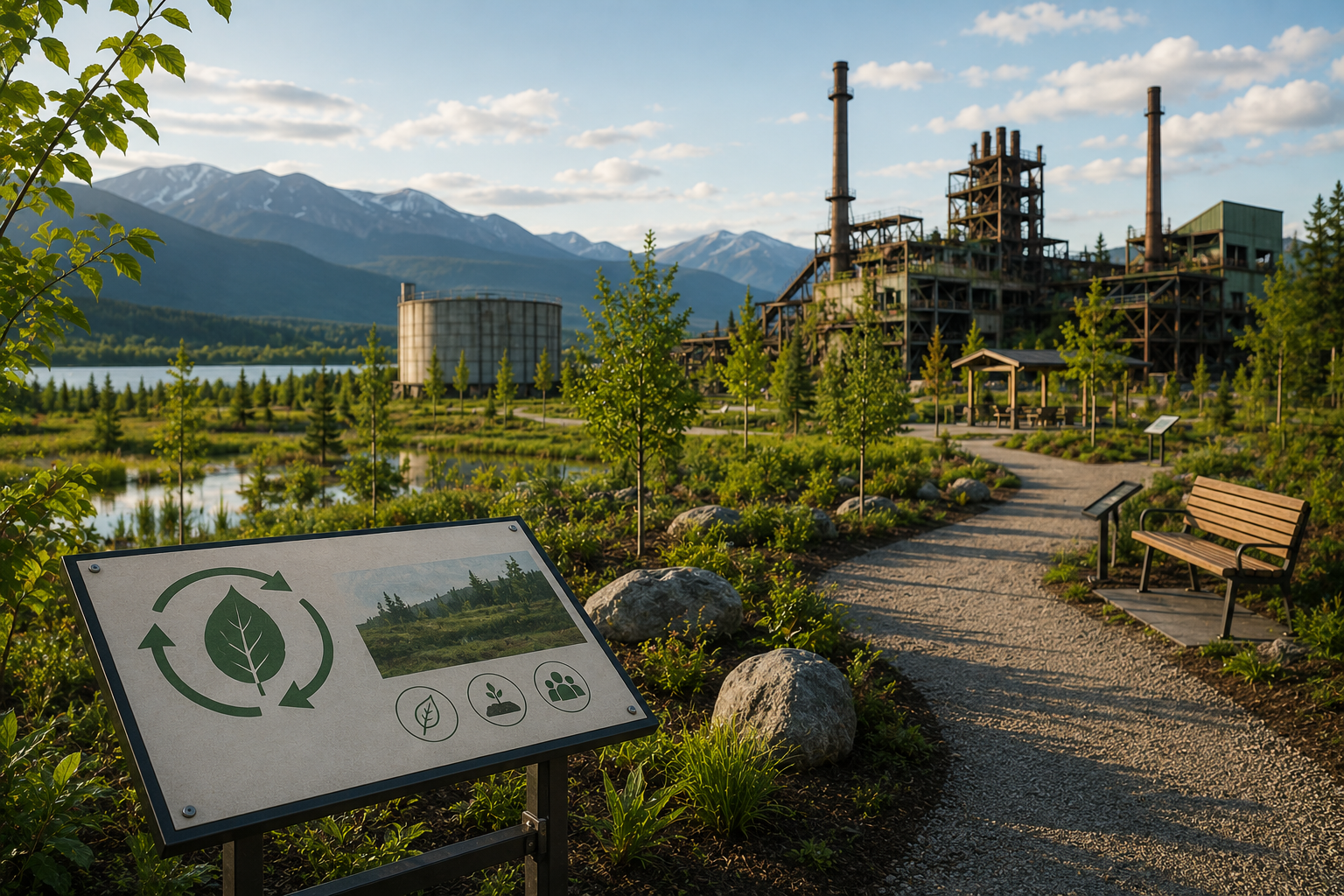
What Happens To Industrial Land After Operations End?
When a refinery, chemical plant, or other industrial facility reaches the end of its operating life, the future of the property can present complicated environmental, economic, and community questions.
Decommissioning may involve demolition, environmental assessment, remediation, regulatory coordination, and long-term planning. Yet the conclusion of industrial operations does not necessarily mean the end of a property's usefulness.
Greg Jevyak's experience in refinery closure, demolition, environmental cleanup, and Brownfield redevelopment provides an example of how industrial properties can move from active operations toward responsible reuse.
Understanding Brownfield Redevelopment
Brownfield properties are generally associated with previously developed sites where actual or potential contamination can complicate future use.
Redeveloping these properties requires more than removing structures. Environmental conditions must be understood, risks must be addressed, and future land uses must be considered.
Greg led efforts that helped transform a former refinery and chemical plant property into the first USEPA Brownfield reuse site in the country. The project demonstrated how remediation and redevelopment can be part of the same long-term strategy.
From Closure To Transformation
Industrial closure can involve numerous stages. Facilities may need to be decommissioned, structures dismantled, equipment removed, environmental issues addressed, and remaining property prepared for another purpose.
Greg's career included specialization in refinery closure, demolition, and environmental cleanup. His experience therefore covered both the physical and environmental aspects of transitioning industrial properties.
This combination is important because successful land reuse depends on understanding what must happen before a property can safely and practically move into its next phase.
The Importance Of Planning
Responsible land reuse begins with planning. Environmental projects can involve significant budgets, multiple contractors, technical consultants, regulatory agencies, and changing schedules.
As an environmental business manager, Greg managed more than $80 million in environmental project work. His responsibilities included estimating, budgeting, planning, scheduling, execution, consultant management, contractor management, and field office operations.
These responsibilities illustrate how land reuse is not simply an environmental exercise. It requires project management discipline to coordinate multiple activities toward a common objective.
Working With Regulators
Industrial property redevelopment frequently involves local, state, and federal environmental agencies.
Greg represented his organization before regulatory agencies and developed relationships with alliance partners. His experience demonstrates the importance of maintaining clear communication throughout complex environmental projects.
Regulatory agencies need accurate information about environmental conditions, remediation activities, and compliance. Project managers, meanwhile, need to understand regulatory requirements well enough to incorporate them into schedules and operational plans.
Recognizing Community Interests
Industrial properties are often located near established communities. When their use changes, local residents can be affected by new development, environmental improvements, traffic, employment opportunities, recreation, or changes in land use.
Greg's work in Wood River, Illinois, included communication with community leaders and support for local projects. He helped direct corporate resources toward three fully accessible playgrounds and supported the local library with annual funding for computers and furniture.
These activities illustrate how relationships between industry and communities can continue to matter even when the focus is primarily on industrial property.
Creating Environmental Value After Industrial Use
Land reuse can also involve ecological considerations. Greg helped establish a certified Wildlife Habitat on the grounds of a former refinery and chemical plant.
The habitat was certified in 2001 and recertified in 2003. Its development demonstrates how land associated with heavy industry can eventually serve purposes beyond commercial or industrial activity.
Environmental restoration can create opportunities for wildlife and natural systems while changing the public perception of formerly industrial properties.
Connecting Land Reuse With Environmental Management
Greg was also responsible for achieving ISO 14001 certification at the industrial site he managed.
Environmental management systems such as ISO 14001 encourage organizations to establish structured approaches to environmental performance. Within the context of industrial land management, such systems can help create consistent processes for identifying environmental impacts, managing responsibilities, and pursuing improvements.
The connection between environmental management systems and land reuse is significant because responsible redevelopment requires environmental considerations to remain part of decision-making throughout the process.
Safety During Industrial Transition
The transition from active industrial operations to closure and reuse can involve substantial safety challenges. Demolition, equipment removal, hazardous materials, heavy machinery, and environmental remediation each require careful planning.
Greg's management record included a 10-year period with no OSHA Recordable Injuries at the site he managed. His training included HAZWOPER, asbestos control practices, and advanced defensive driving.
Safety therefore formed an important part of his broader approach to industrial management and environmental work.
A Model For Thinking About Former Industrial Sites
The story of industrial land reuse is ultimately about transition. A property can move from active manufacturing or processing to closure, remediation, restoration, and eventually a new purpose.
Greg Jevyak's career provides a practical perspective on that process because his responsibilities crossed many of its stages. His experience included industrial operations, project management, environmental cleanup, demolition, regulatory relationships, community engagement, and ecological restoration.
Responsible reuse requires these elements to work together. Environmental problems must be addressed, safety must remain central, communities should be considered, and future land uses must be planned carefully.
Looking Beyond The Cleanup
Perhaps the most important concept in responsible industrial land reuse is that cleanup should not necessarily be viewed as the final objective.
Remediation can create the foundation for something else: productive redevelopment, community benefit, ecological restoration, or a combination of these possibilities.
The transformation of former industrial properties demonstrates how environmental management can contribute to long-term land stewardship. Greg Jevyak's experience offers one example of how technical knowledge, project management, safety, regulatory coordination, and community relationships can intersect when industrial land enters a new chapter.